Can you clean up after a death yourself?
People ask us this quietly, usually because money is tight or because it feels wrong to let a stranger do it. It is a fair question and it deserves a straight answer rather than a scare.
Nothing stops you legally, as far as we know
We are cleaners, not lawyers, and we are not going to tell you what the law requires of you in your own home. What we can tell you is what the work involves, so you can decide with the facts rather than the feeling.
The risk is not the part you can see
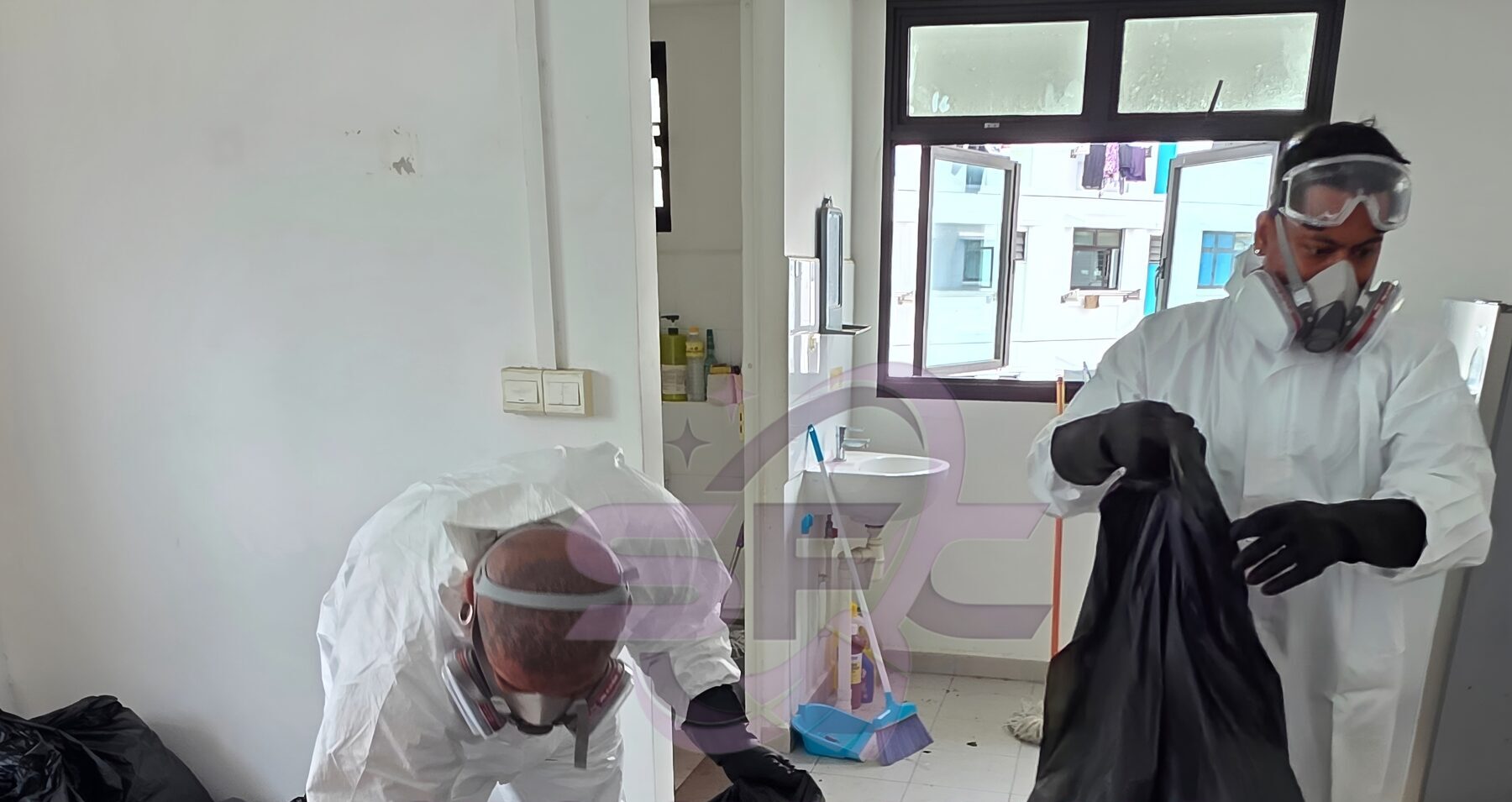
Bodily fluids can carry bloodborne pathogens. That is the whole reason this is treated as biohazard work rather than heavy cleaning, and it does not depend on who the person was or how they died.
Household gloves, a mask from the drawer and a bottle of bleach are not protection against that, and a mop is close to the worst tool available, because it spreads the contamination across a wider area and then goes back in a bucket.
- Porous materials absorb. Mattresses, sofa foam, timber, plaster and the backing under vinyl take fluid in. Wiping the surface leaves what soaked through.
- Grout and joins hold it. Tile looks solved long before it is, because the lines between the tiles are not sealed the way the tile face is.
- Gravity moves it. Fluid travels under skirting, under flooring and into the slab, so the affected area is usually larger than the mark.
- Waste has to go somewhere. Anything contaminated cannot legally go down the rubbish chute with the household rubbish, and that is the part people only discover once they have filled the bags.
The odour tells you whether it worked
This is the part that sends people to us second, after trying it themselves. A room can look completely clean and still smell, because the smell is coming from what soaked in rather than from what was on top.
Cleaning the surface and then covering the room with fragrance does not remove it, and repainting can seal it in. We wrote about that separately in why the smell comes back after a death in a flat.
Then there is the part nobody costs in
The practical argument is the weaker one. The real reason to hand this over is that it is a room you are going to have to keep living with, and the memory of having cleaned it yourself is not something you can undo afterwards.
We have never met a family who regretted not doing it themselves. We have met several who regretted the opposite.
What to ask if you call anybody
If you do call a company, ours or anybody else’s, ask how the waste is disposed of, whether anyone attends in person before quoting, and what happens if the odour comes back. Plain answers are the test.
In Singapore the National Environment Agency licenses cleaning businesses, and the list is public. You can look any company up yourself on the NEA list of licensed cleaning businesses. Note the wording: NEA licenses, it does not certify. A company describing itself as “NEA certified” has the phrasing wrong, which does not by itself mean it is unlicensed, but it does mean nobody checked.
You can read what we do and how on trauma and biohazard remediation, or talk it through with one of us first.
If you have already started
Plenty of people call us halfway through, and they usually open by apologising. There is nothing to apologise for and it does not make the job harder. It only changes what we need to know.
Tell us what you used, what you have already moved or thrown away, and where you put it. Cleaning products matter because some of them react badly with what we use, and a surface that has been treated already reads differently when we assess it.
Tell us too if anything absorbent has been cleaned rather than removed, because that is the most common reason an odour comes back weeks later in a room everybody believed was finished.
Look after yourself, not just the room
If you have handled any of it, wash thoroughly, bag the clothing you were wearing separately, and do not put it through a machine with anything else. If you have cut or scratched yourself at any point while doing it, speak to a doctor rather than to us. That is not us being dramatic, it is the one part of this where we are genuinely not the right people to ask.
What the work involves when it is done properly is in what biohazard actually means in a home.