What “biohazard” actually means in a home
The word does a lot of frightening and not much explaining. It is worth knowing what it actually means, because it is the difference between a cleaning job and the work we are called for.
It describes the material, not the room
A biohazard is biological material that can carry infection. In a home that usually means blood and other bodily fluids, and anything those fluids have soaked into.
It is not a judgement about the person, the family or the state of the house. A spotless flat can contain a biohazard and a filthy one can contain none.
What it changes about the work
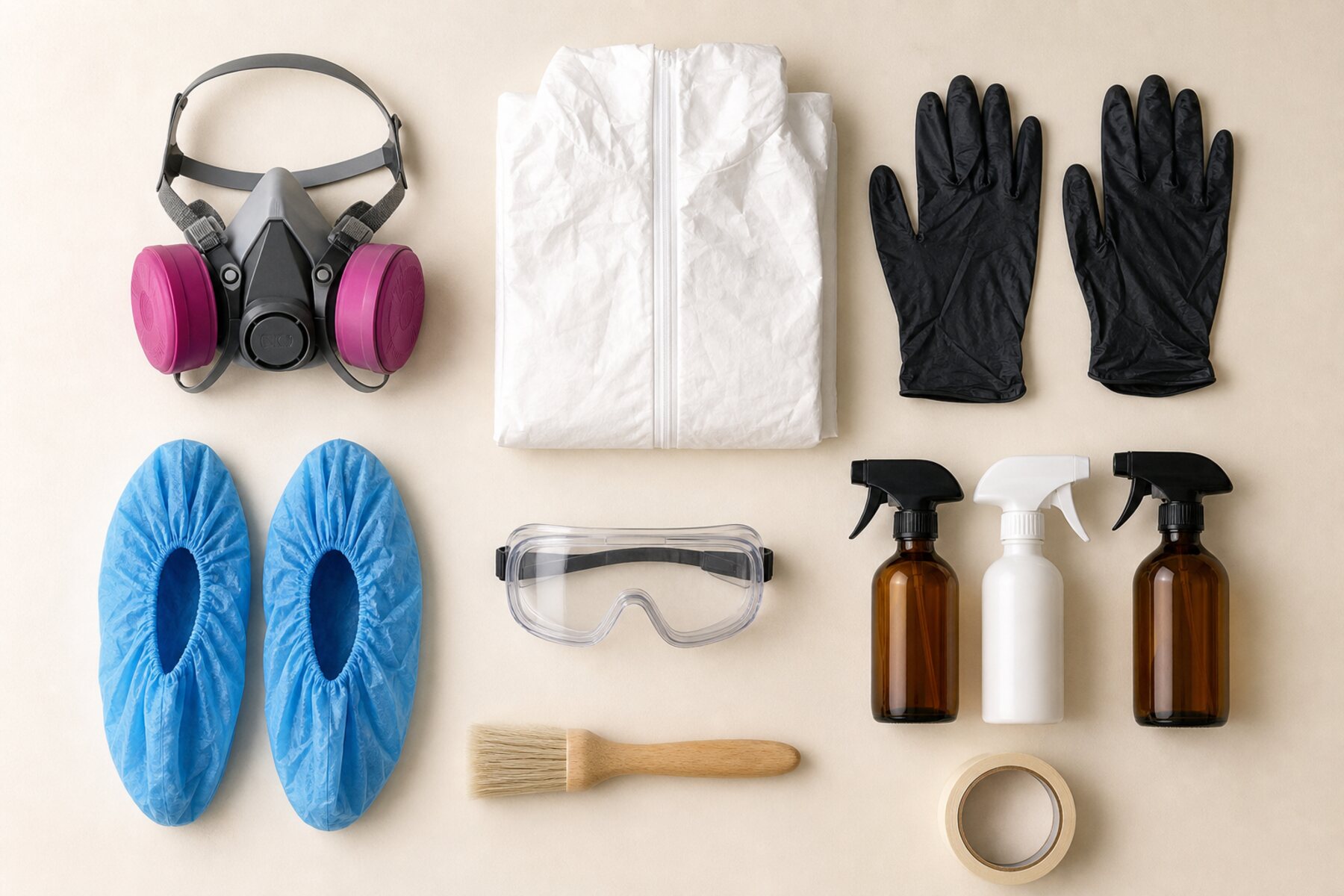
- Protection. Coveralls, respirators, eye protection and gloves, because the job is done close up and for hours, not in the thirty seconds a photograph suggests.
- Containment. The affected area is isolated so the problem does not travel through the rest of the home on feet, cloths and equipment.
- Removal, not just cleaning. Porous material that has absorbed fluid is taken out, because there is no product that reaches into foam or under floorboards.
- Disposal. Contaminated waste leaves through the proper channel. It does not go down the chute and it does not go in the back of a van with the household rubbish.
- Verification. Surfaces are treated and then checked, rather than declared done because they look done.
Why the word matters when you are choosing someone
Plenty of companies will take a job like this. Fewer will tell you what they will do with the waste, and that single question separates them faster than anything on a website.
Ask where the waste goes. A company that has thought about the answer will have one ready.
What it does not mean
It does not mean the whole home is dangerous, that the flat has to be stripped, or that neighbours are at risk. The affected area is usually much smaller than people fear, and the point of containment is to keep it that way.
It also does not mean you have to leave. Some people want to be out of the house, others want to stay. We work around whichever you need.
Who decides
One of the directors attends and assesses the space in person, and the scope is set in the room rather than over the phone. What is removed and what is treated is explained to you before anything is moved.
If you want to see how a job runs end to end, that is on What happens now. The service itself is trauma and biohazard remediation.
How big the affected area usually is
Smaller than people fear and larger than it looks. Those two things are both true and they are the reason this is assessed rather than estimated.
Smaller, because containment works and because most of a home is genuinely unaffected. Families brace for the whole flat and it is almost never the whole flat.
Larger than it looks, because fluid travels under and into things. The mark shows where it landed, not where it came to rest, which is why the honest answer to how much has to come out is usually “after we have opened that up”.
Why the word is used at all
It is not there to frighten anybody into booking. It is the word that determines the protection, the containment and the disposal route, and those three are the difference between this and heavy cleaning.
If a company uses the word and then describes a job that sounds like ordinary cleaning, the word is doing marketing rather than work. What the crew actually wears, and why, is in what the crew wears on a biohazard job, and there is more on the alternative in can you clean up after a death yourself.