
How to talk to a parent about a hoarded home
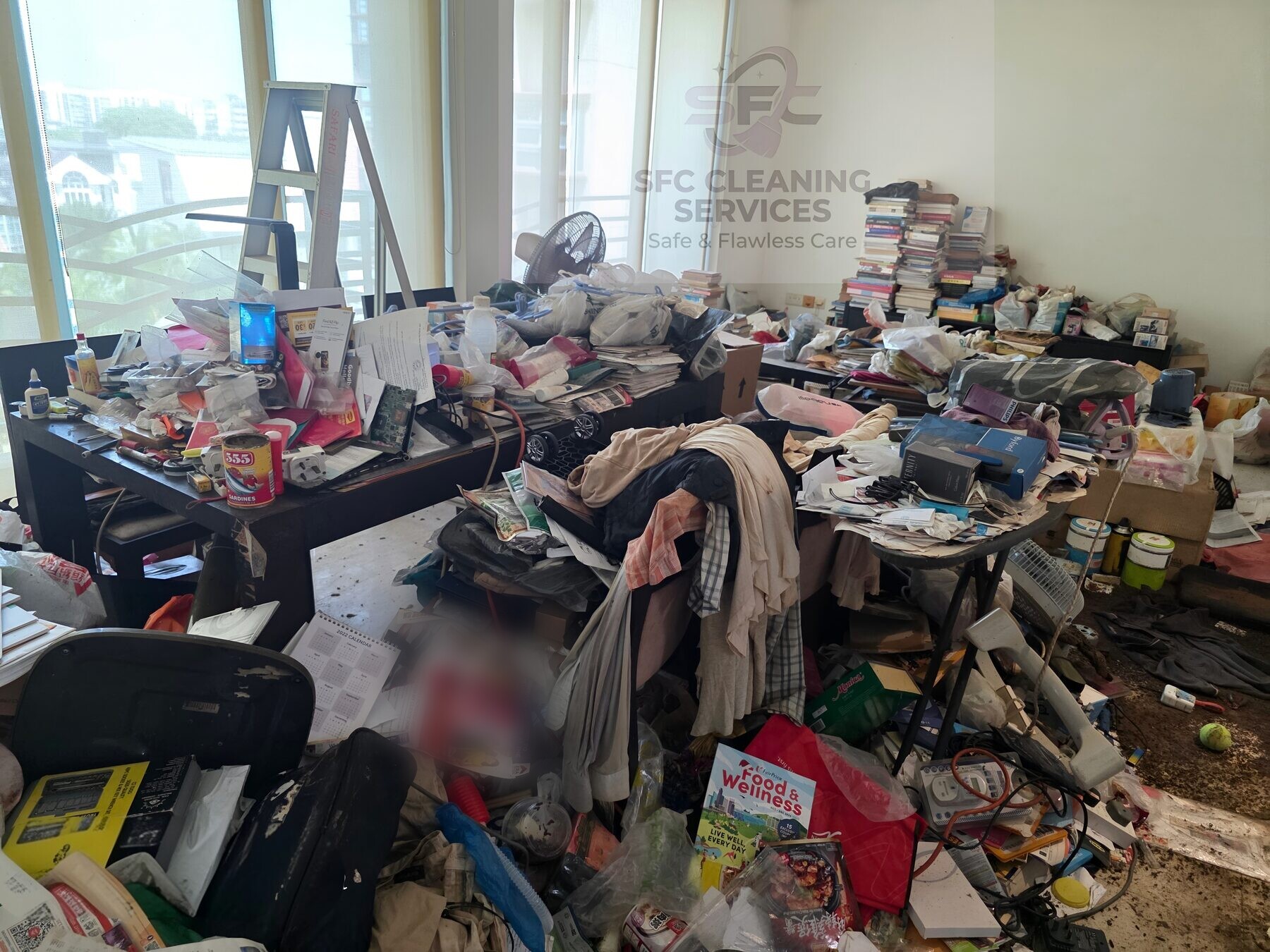
We are cleaners, not counsellors, and we are not going to pretend otherwise. What we do have is a lot of time spent in the middle of these conversations, and some patterns worth passing on.
The volume is not the problem you are solving
Families come to us with a logistics question, because logistics is the part that can be solved. But a clearance arranged over the head of the person living there tends to produce a clean home and a person who will not speak to you.
If they are alive, present and going to keep living there, their agreement is not a courtesy. It is the thing that decides whether the result holds.
What tends to backfire
- Surprise. Arriving with a van and a plan reads as a raid, however kindly it is meant.
- Arguing about individual items. Every object becomes a separate negotiation and the day ends with nothing moved.
- Numbers and shame. Telling somebody how bad it is tells them something they already know.
- Ultimatums. They work once, and then you have spent the relationship on one clearance.
What tends to help
- Lead with safety, not tidiness. Blocked exits, the state of the kitchen, a bathroom that cannot be used. Those are concrete and they are not about taste.
- Make the decisions theirs. What leaves and what stays is agreed with them, before anyone starts.
- Start with one room. A finished bathroom is more persuasive than any argument about the rest of the flat.
- Name the things that are safe. Documents, photographs and keepsakes being set aside rather than binned is often the whole fear.
The fastest way to clear a hoarded home is to ignore the person living in it. That is also the way that fails.
How we handle the visit
One of the directors comes and looks first, and that visit can be as low-key as you need. If it would help for us to be introduced as somebody coming to look at the flat rather than as a clearance company, say so beforehand.
Nothing is moved on that visit. Scope is decided in the room and explained to whoever has the say, and that includes the person living there.
If it is not your parent
Landlords, agents and executors deal with this on a different footing and usually on a deadline. That is a different conversation and we have written it up separately in clearing a hoarded unit when you are the landlord.
The service is hoarder disposal and clearance, and there is more on the work itself in clearing a hoarded home in Singapore.
Agree what happens afterwards, before it happens
Families concentrate everything on getting agreement to the clearance and give no thought to the week after it, which is when the outcome is actually decided.
A flat that is cleared and then left alone tends to refill, and the person living there knows that, which is often part of why they resisted. Talking about what the room is for afterwards, who visits, and what would help it stay usable is a better conversation than any argument about the bags.
We clear and clean. We are not able to help with what comes after and we are not going to pretend that a clearance solves anything on its own.
If they will not agree
Then the honest position is that we are not the right people yet. We will come and look if the person responsible for the property asks us to, but we do not turn up to persuade anybody and we will not be part of a surprise.
That is a firm line. It protects your relationship with them more than it protects us, and it means that when they do agree, the company arriving is not one they already have a reason to distrust. What is protected during the work is in what happens to the belongings.