
Post-renovation cleaning: why the contractor’s sweep-out is not a clean
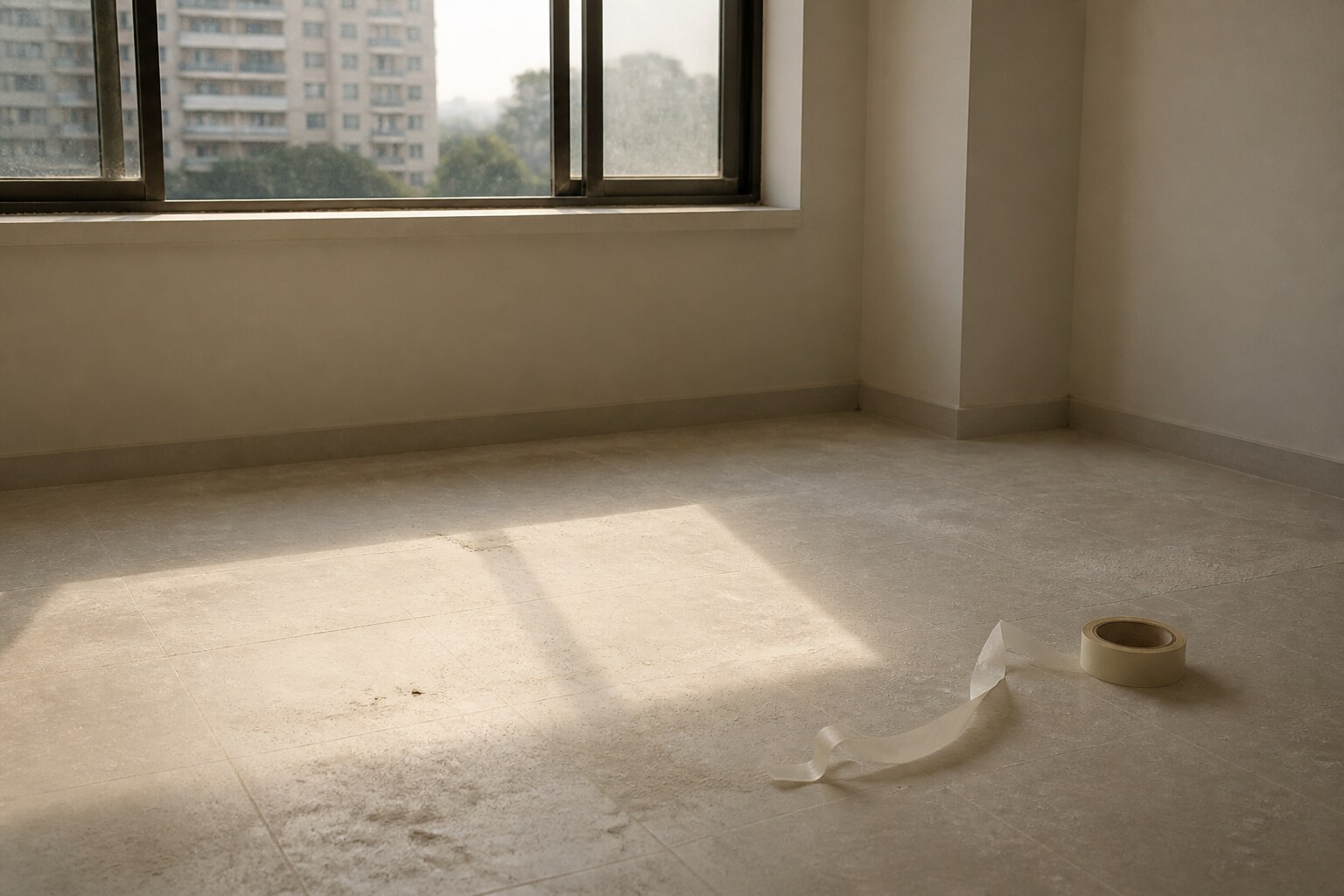
The keys come back, the unit looks finished, and then you run a finger along the top of a door frame.
This is the most common complaint after a renovation, and it is usually not a sign that anyone did a bad job. It is a sign that two different jobs got confused with each other.
Renovation dust does not behave like household dust
Household dust is mostly fabric, skin and hair. It is relatively heavy, it settles where it lands, and a normal clean removes it.
Renovation dust is mineral: cement, plaster, tile, grout and sawdust, ground fine. It is light enough to stay airborne long after the work has stopped, fine enough to travel into gaps you cannot see into, and abrasive, which is why wiping it dry across a new surface can leave the surface worse than before you started.
It settles for days after the last tradesman leaves. Clean too early and you will be cleaning again.
What the contractor’s sweep-out is for
A contractor clears the site so the unit can be handed over: debris out, offcuts out, floor swept, tools gone. That is a handover, and it is a reasonable thing to be included.
It is not the same as making a home fit to move into, and it is not meant to be. Expecting one to do the job of the other is where the disappointment comes from.
Where the dust actually hides
- Tops of door frames, wardrobes and kitchen cabinets, above eye level where nobody looks.
- Curtain tracks and window channels, which then dust the curtains you have just hung.
- Inside the air conditioning, on the filter and the fan. This is the one that matters most, because it turns the system into a distributor.
- Inside cabinets and drawers, which get cleaned outside and not in.
- Light fittings and ceiling fans, which then shed onto everything below them.
- Skirting edges, grout lines and floor corners, where a broom pushes dust rather than lifting it.
- Grout haze and paint speckle on new tile and glass, which is not dust at all and does not come off with a cloth.
The order matters more than the effort
- Top down. Ceiling fittings and high surfaces before floors, or the floor gets done twice.
- Vacuum before wiping. Lift the dust out rather than pushing it around, and use filtration that holds fine particles instead of returning them to the room.
- Wet, not dry. Dry cloths move abrasive dust across new finishes.
- Air conditioning early, so you are not running a dust distributor over a unit you have already cleaned.
- Glass and mirrors last, after everything above them has been dealt with.
When to book it
After the last trade has finished and before the furniture arrives. An empty unit can be cleaned properly in a way a furnished one cannot, and once soft furnishings are in place they will hold whatever is still airborne.
If the handover date and the moving date are the same day, say so when you call, because that changes how the job has to be sequenced.
More on this service is on the post-renovation cleaning page, and the way we run any job from first call to handover is on What happens now.